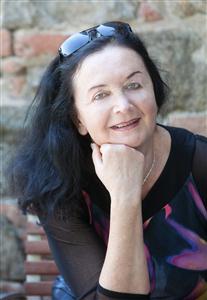
Writer and publicist, former war journalist, expert in Slavic languages, psychologist, human rights activist and intercultural mediator.
Originally from Slovakia, has been living in Switzerland since 1968.
"Irena Brežná is one of eastern Europe's most important literary voices, even though she left Slovakia for Switzerland and writes in German."
— Swiss Radio DRSAbout
Irena Brežná is a Slovak-born Swiss writer and journalist. Following the Soviet-led invasion of Czechoslovakia in 1968 she emigrated to Switzerland, and studied Slavonic studies, philosophy and psychology at Basle University. In addition to writing, she has been an Amnesty International activist and worked as a psychologist and an interpreter for refugees. She has been involved with and supported, a number of humanitarian projects, for example in Guinea as well as in Chechnya, where she also served as war correspondent. She writes mostly in German and has received numerous prizes in Switzerland, Germany and Slovakia for her journalism and literary work, including, in 2002, the Emma Journalist Prize, and the Theodor Wolff Prize for her war reportage from Chechnya. In 2021 the German PEN Centre awarded her the prestigious Hermann Kesten Prize for her writing and commitment to human rights and the city of Basel with the important award Kulturpreis. She has published several collections of essays, short stories and reportages, as well as the novels Schuppenhaut (1989, 2001, Scaly Skin) and Die beste aller Welten (2008, The Best of All Worlds). Her third novel, The Thankless Foreigner, published in 2012, received the Swiss Literature Prize and has been translated into English, Slovak, French, Italian, Russian, Macedonian, Czech, Hungarian, Arab, Hindi and Swedish.
▶ Full Biography
Irena Brežná, born in 1950 in Bratislava. In 1968, she emigrated to Switzerland with her parents. Since graduating from the Faculty of Arts at Basel University (lic. phil. in Slavonic studies, philosophy and psychology) in 1975, she has worked as independent journalist and author and as a teacher of Russian, a translator and interpreter of Slavonic languages and as a psychologist at psychology research institutes in Munich and Basel.
Her work has been published in German in the Swiss press (Neue Zürcher Zeitung, Berner Zeitung, Tages-Anzeiger, Tages-Anzeiger-Magazin, Basler Zeitung, Annabelle, Bolero, WOZ, Weltweit et.al.) and in Germany (Freitag, Merian, Frankfurter Rundschau, Zeit-Magazin, Süddeutsche Zeitung, Berliner Zeitung, Badische Zeitung), as well as in Slovakia (Aspekt, SME, OS, Kulturny zivot, Pravda). For many years, she has been working as a Swiss correspondent for Slovak Radio Free Europe, BBC and Deutsche Welle. Brežná has written commentary, essays and a radio play for the German-speaking radio stations (DRS, WDR 3). She has won fourteen awards for journalism and literature in Switzerland, Germany and Slovakia, The Swiss Award for Literature, The Dominik-Tatarka-Award, The Award of the Year from the Slovak Writers' Society OSS, The Theodor-Wolff-Prize in Berlin, The German PEN Centre Award (see Awards). She has received several grants from the Swiss cultural foundation Pro Helvetia and from the literature funding scheme Literaturkreditkommission of the City of Basel. Her texts have been published in numerous anthologies and literary magazines, including: Transatlantik, Drehpunkt, Kafka, Salz, Podium, Neue deutsche Literatur, Literatur und Kritik, Entwürfe, Individualität and Poesie et.al.
She continues to be actively involved in a variety of areas on a voluntary basis. During the 1970s and 1980s she campaigned for the release of Soviet political prisoners in her role as a coordinator for the Swiss chapter of Amnesty international. She has helped those who opposed the regimes in Central and Eastern Europe (inter alia the Moscow Centre for Prison Reform) and she assisted in establishing the first Slovak feminist magazine Aspekt in Bratislava. Her other work includes fundraising for Chechen women's projects, and collecting works of world literature for a library in Mamou, Guinea in West Africa, as well as text books for local schools.
During The First Chechen war (1994-96) and during a short period of independence there (1996-98), she has reported in more than 80 texts on the atrocities committed by russian army and about the freedom fight of Chechen, female human rights activists. She has appeared at events and international conferences, at schools and universities in Germany, Italy, France, Austria, Switzerland and in the U.S.
During the Kosovo Conflict, she worked in the Kosovo advisory centre of the Swiss Red Cross in Basel.
In 1996, she entered a journalism competition in Klagenfurt with a report on the Russian Mafia.
In 2014-2017 she wrote a regular column for SME, the largest daily newspaper in Slovakia.
She regularly addresses the subjects of otherness and injustice and deals with alienation and crossing of boundaries.
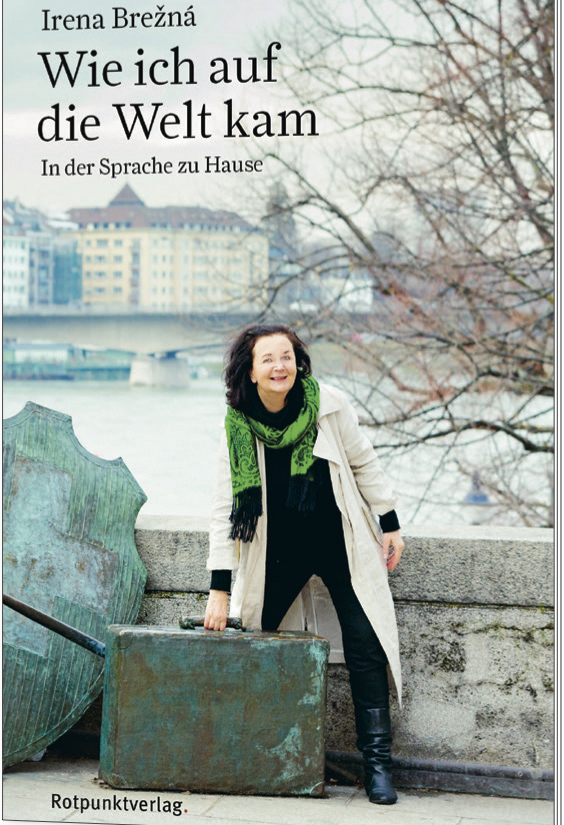
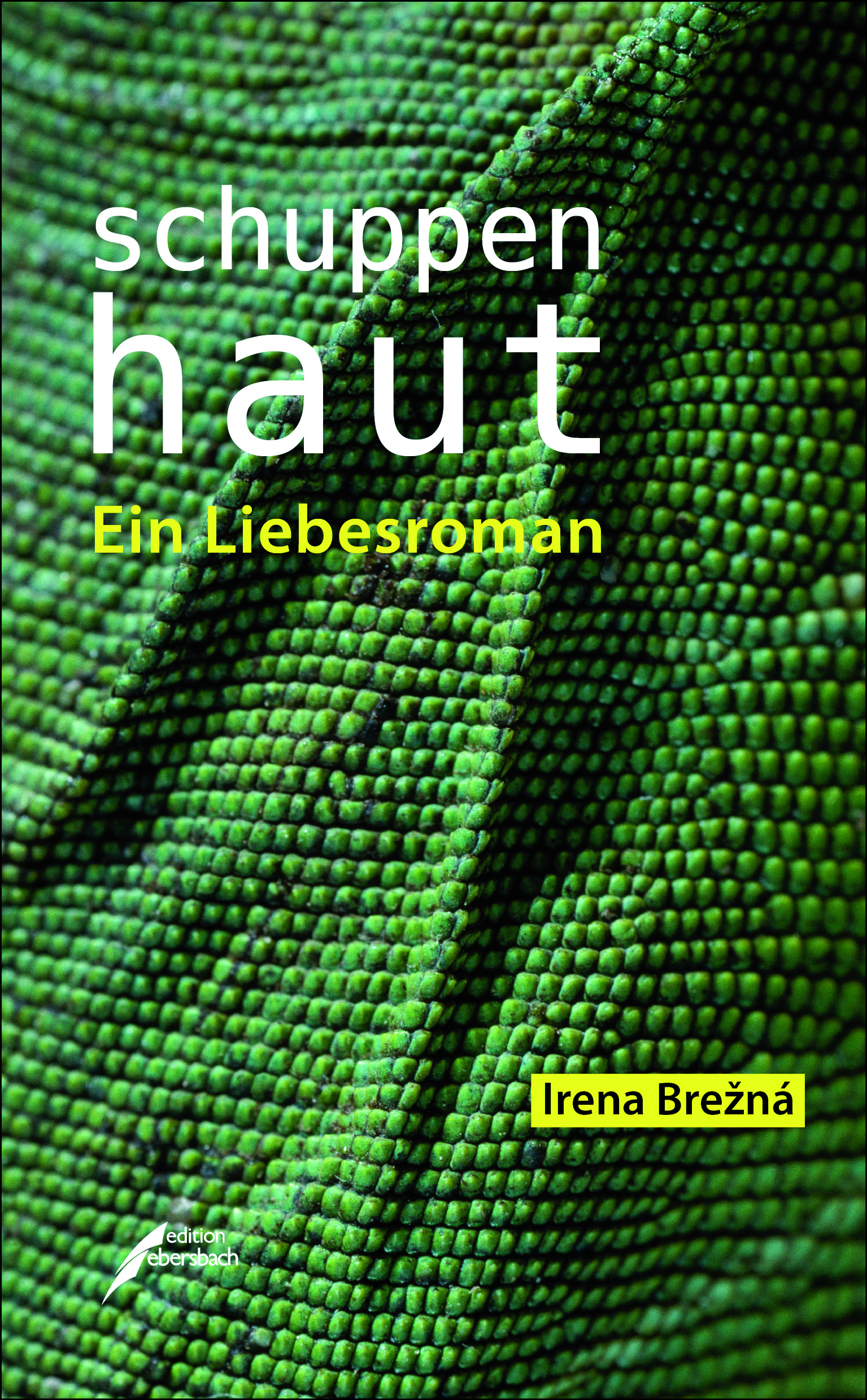
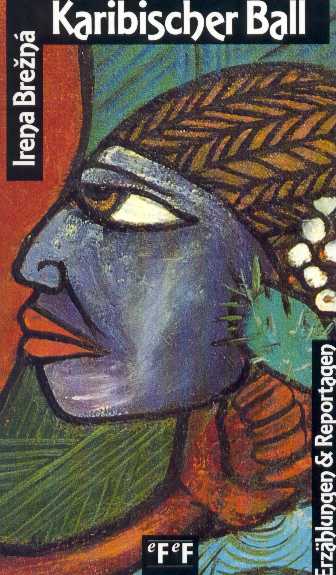
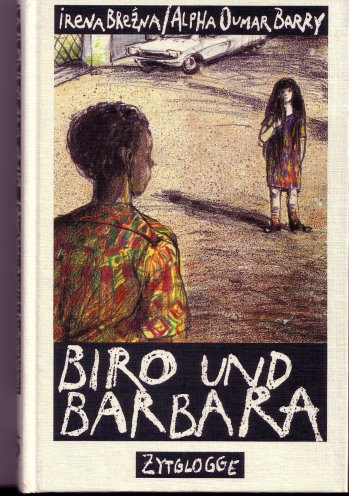
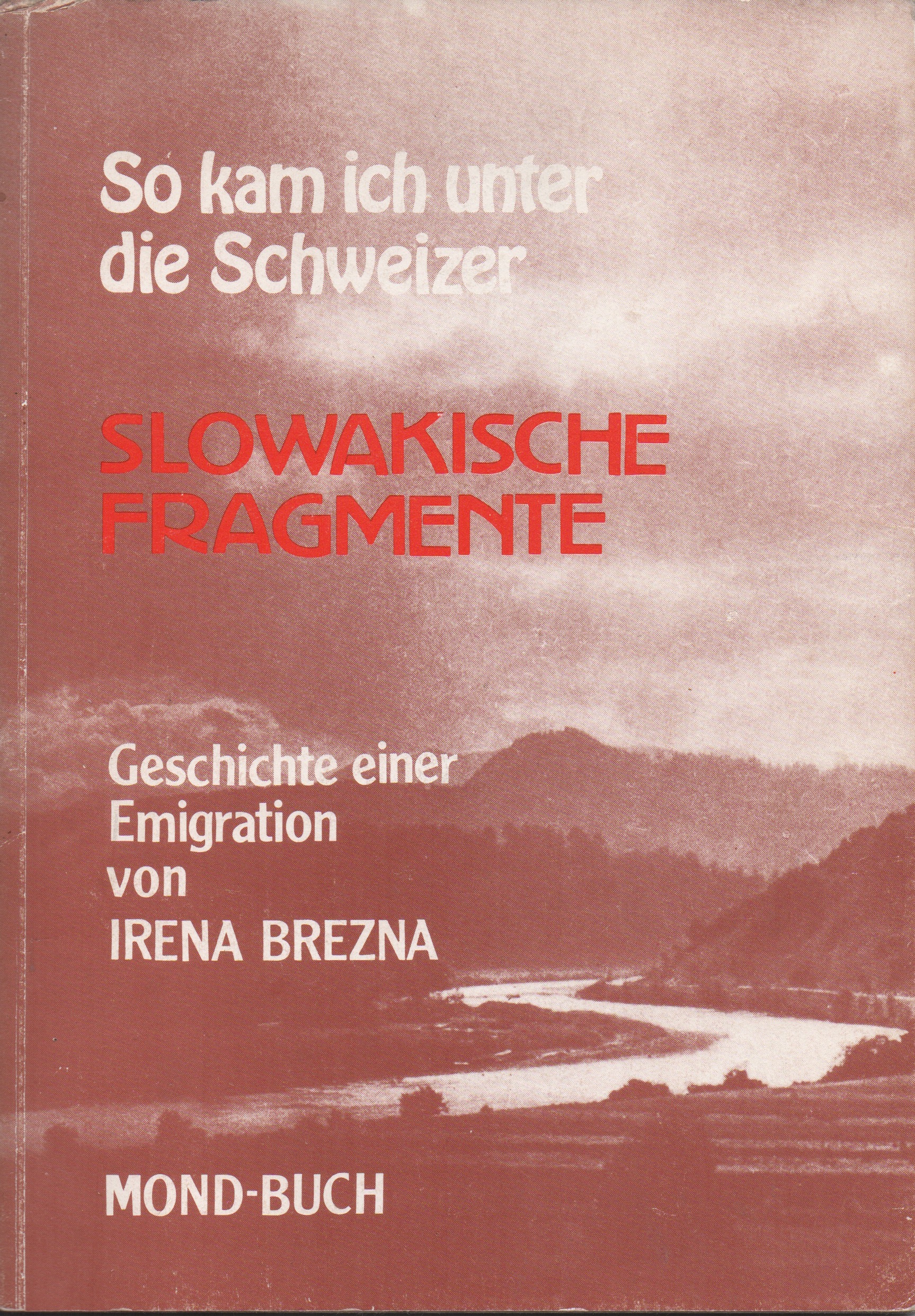
Her childhood in Slovakia and emigration are given their first literary treatment in a small book called Slovak Fragments (Slowakische Fragmente), Mondbuch Basel, 1982. The text was written for a two-hour programme on the DRS radio station. Together with the Guinean author Alpha Oumar Barry, she wrote a (French-German) book for young people entitled Biro und Barbara, Zytglogge Bern, 1989, which opposes racism in a poetic way. Her reports and stories about black-white love were published in the collection of stories Caribbean Ball (Karibischer Ball), eFeF Bern 1991. The love story with the title Psoriasis, My Love (Schuppenhaut), a completely revised version published by Edition Ebersbach, Berlin in 2010, tells of the hidden strangeness of the female novelist. Her first literary commentaries from Central and Eastern Europe after the fall of communism were published in a collection of stories with the title False Myths (Falsche Mythen), eFeF Bern, 1996. Her disturbing war reports about women in Chechnya were published in the anthology She-wolves from Sernovodsk, by Quell, Stuttgart 1997. In her last anthology The Collector of Souls, On the road in my Europe, published by Aufbau Berlin 2003, Brežná not only explores her main topic of home and strangeness again, but she leads us to an Eastern and Central Europe (as well as Chechnya) in the process of reconstruction.
Her texts have been published in six books in Slovakia: Psoriasis, My Love, Archa 1990, Liquid Fetish, Aspekt 2005, The Best of All Worlds, Aspekt 2007, The Thankless Stranger, Aspekt 2014, She-Wolves from Sernovodsk, Absynt 2016, Regards of an Emigrant, Aspekt 2018.
Her commitment to cosmopolitanism, her hope for transcultural identity, her sensual and, at the same time, analytical language open up new horizons.
The transfer from the Slovak language of a silenced emigrant to the German written language can be compared to new lungs which have gradually grown: "My resurrection in German is the only house I've ever built. The words are objects I have designed" (False myths).
All Books
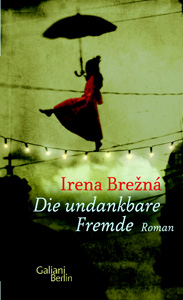
The Thankless Foreigner
Reviews
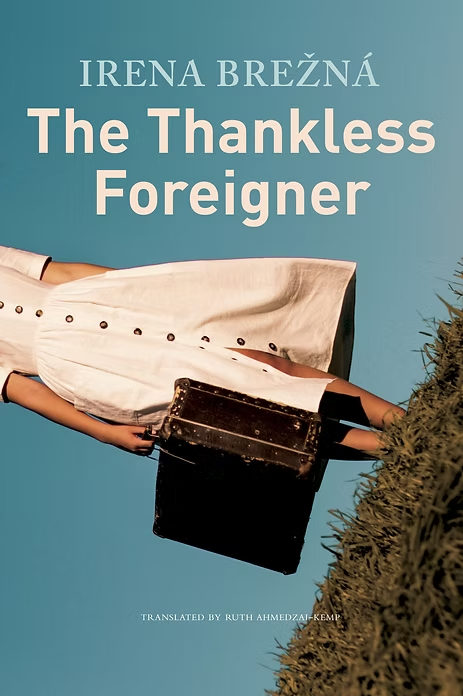
"The Thankless Foreigner is an amusing, spirited and wonderfully based tale."
Die Zeit"The Thankless Foreigner is an account of the immigrant experience, fuelled by autobiography, which succeeds in conveying a real sense of intimacy and authenticity regarding the immigrant experience. The main storyline charts the struggle to come to terms with an alien culture – a situation which is compared to being a young, passionate woman forced to endure an imposed marriage with a stern and much older man. However, as the narrator matures, she has a growing awareness of those aspects of her new homeland which are positive. Interwoven with the main narrative are a series of 'mini-dramas' arising from the narrator's experiences as an interpreter mediating between immigrants, medical and legal authorities, and social workers. These often very moving episodes highlight the tragedy and vulnerability of those who flee impossible conditions at home and hope, often against overwhelming odds, to make something of their lives in a new country. Brežná's fluid writing style has a lyricism and lightness of touch which communicate her amusement and bemusement at the collective behavioural traits of the native people in her host country of Switzerland. And her moving depiction of the plight of other immigrants ensures that the serious underlying issues concerning poverty, exploitation and political persecution are not underplayed."
New Books in German"Her autobiographical novel is a sad and touching yet, at the same time, amusing book. The young first-person narrator experiences the move to Switzerland as anything but salvation as an 18-year-old. She finds the country, paralysed by the Cold War, an unsettling and very strange place. She observes her own attempts to integrate and vividly portrays the peculiarities of Switzerland and the idiosyncrasies of the Swiss. Brežná intersperses the episodes from her everyday life with "minutes" from her job as a translator. This juxtaposition represents the book's strength. It gives a real background to the accounts of the young first-person narrator who lives in a state of constant confrontation and quarrels with almost everyone. Brežná's book is not just an enjoyable read but also an extremely interesting contribution to the debate on integration currently taking place in Switzerland."
The Magazine for the Swiss AbroadCRITICAL OF SWISSNESS, OR CRITICALLY SWISS? RECENT AUTOBIOGRAPHICAL FICTIONS BY IRENA BREŽNÁ
Recent literature from German-speaking Switzerland is heavily inflected by twentieth-century political and economic migrations. Making use of a Foucauldian analytic framework, this article considers two contemporary texts by the Swiss author Irena Brežná that fictionalise the writer's own experiences of migration and integration, and enable Brežná to be placed contextually within a specifically Swiss literary tradition. Key themes addressed include the author's critique of assimilationist societal pressures, a wider problematising of aspects of Swiss democratic traditions, and Brežná's resistance to performing an expected migrant identity in Switzerland.
JONNY JOHNSTON (Trinity College Dublin) · German Life and Letters 68:2 April 2015 · 0016-8777 (print); 1468–0483 (online)The Best of All Worlds

Fiction: The autobiographical novel The Best of All Worlds was published in 2008 by Edition Ebersbach Berlin.
In a humorous and poetic way the adolescent protagonist narrates her rather absurd life in a small Central Eastern European town in the 1950s. While her mother disappears into prison, the girl, torn between family and school, seeks her own way. The myth of the socialist hero seems more attractive than her grandmother's Catholicism or the middle-class, bourgeois life of her father, who is sent to work in bridge construction as a form of proletarian reeducation. Only her brother remains and, with him, the daily threat of physical violence. The girl, who wants to become a heroine one day, develops great powers of survival, despite her tragic circumstances. Her grandfather's natural mysticism emerges as a refuge, as well as her own sensuality and enthusiasm for change of any kind. The incisively described background events, focused observations and fragmented associative memories provide one with an intimate insight into the ambience of society at the time and have general human significance as well. The narration is carried forward with liberating ease, made possible by the geographical and chronological distance of the author – the "happy dictatorship of the Proletariat" is over, as if it were all a dream, but one whose effects live on in "the heart of the albatross".
An excerpt of the novel, translated in English by Janet Livingstone, is published here.
Reviews
Irena Brežná uses the view of a child and comic observer, who watches how the world works and sees how unfit words are to describe it when we take everything literally. And how we feel when suddenly, our basic principles are no longer valid. "The Statue of Liberty comes along with imperfection" and with the acknowledgement of that imperfection, says the author in an interview.
R. von Bitter, Bayerisches Fernsehen, Das Literaturmagazin"Irena Brežná's novel of childhood, which is steeped in the years of building Czechoslovak communism, is precise, poetic, heartfelt and unrelenting – all at once."
Karl Markus Gauß, Literatur+Kritik"Irena Brežná's novel is a book worth reading and worthy of loving. We can discover in it much beauty, wisdom and humanity."
Angela Repka, Neue Zürcher Zeitung"A poetic evaluation from the era of building Eastern European socialism full of odd and humorous anecdotes. A child's mind takes the dogma and phrases literally – and thus reveals in them deceit and paranoia. This approach is extremely comic and satirical. It is a book filled with literary utopia."
Ursula März, Deutschlandradio Kultur"A bright and blunt girl, misbehaved and stubborn, as it should be when one is young and takes their strength from the earth. The heroine protects this kind of grounding of hers from premature adult complaining, with a rather earthly electrifying voice that rejects idle talk and sentimentality. No, Irena Brežná's book bears no relation to politically correct, cheap and predictable stereotypes harbored by the West about the East according to some ideological compass. It is much more like the burlesque-sarcastic world-views of authors such as Hrabal, Esterhazy, Cosic, Stasiuk, et al. This cheeky girl, like a modern-day Candide, lays it out for all to see and, without falsely charming talk, presents a variety of themes. This is definitely recommended reading."
Gerd Burger, Ostbayerisches Magazin Lichtung"This book is a veritably miraculous parable of dictatorship, which each of us can identify and bring to life with all its images and experiences."
Matthias Waha, Mittelbayerische Zeitung"A slim novel about the dark times of her youth in Bratislava. The Best of All Worlds is what emerges in the head of a child, when he or she suffers under totalitarian conditions."
Hubert Winkels, Deutschlandradio"It's always difficult with children's points of view. In the case of Irena Brežná's novel, however, it works well, since the child assembles anew for herself the various ideologies that she acquires. Linguistically, it is truly original."
In 2008, the novel The Best of All Worlds was on the SWR Best Books List.
Caroline Neubaur, SWR-BestenlisteThe book was recommended by FAZ journalist Hubert Spiegel in the Börsenblatt Best List.
"It is a very political, a very poetic book that you must read."
Gabriele von Arnim, Literaturclub SF1Translations
Transl. Jana Cvikova
Transl. Jana Zoubková
Transl. Laurent Vallance
Transl. Erika Vályi Horváth
Transl. Helliana Ianculescu
Books about Eastern/Central Europe
The Collector of Souls
The collection of stories entitled The Collector of Souls, On the Road In My Europe – Aufbau Berlin 2003, 207 pages.
The Double Track Book: On the one hand, literary journalism from the peculiar and thriving European borders – Moldova, Slovakia, Poland, Kosovo, Romania and again and again Chechnya; on the other hand, travel sketches, essays on the topic of forced displacement, alienation, war, political involvement, the right of self-preservation and reflections on writing. The collection is an organic whole, a poetical, absurd coming-of-age novel full of facts written by a novelist and at the same time by the Eastern European countries, who are introduced to the West by a marveling narrator. We become involved in the synchronized process featuring the narrator and the remote areas in their period of transition; we witness the birth of texts, which are happening in Basel. By means of a polished and foreign German language, the author, who is a multilingual personality herself, pieces together East-West fragmentation and creates reality from utopia.
False Myths
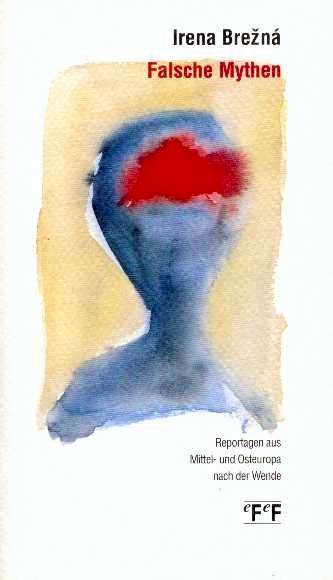
Reports from Central and Eastern Europe after the fall of communism. eFeF, Bern 1996, 191 pages.
The "iron curtain" has fallen and a Czechoslovak emigrant travels back to her homeland after more than two decades. What she finds there is a cracked shell bursting with nationalism, but also with new hope. She weeps with the victims, but also confirms their participation in the crime. She travels further to visit Crimean Tartars, former Russian dissidents, mafiosi in the Russian Far East and to write reports. She formulates portraits of the Russian nationalist Vladimir Shirinovskij, the human rights activist Sergej Kovaljov and the GULAG reformist Valerij Abramkin, listening to them, commenting and explaining the "Wild East" both as a native resident as well as a stranger. Under the cover of external ugliness, she discovers truth-seekers, warmth and courage, but also the danger of brutalisation, and the beginning of the Chechen war. This subjective view is combined with a matter-of-fact analysis and, in addition to many ideas, conveys the general mood.
She-Wolves from Sernovodsk
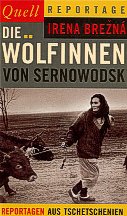
Reviews
Brežná moved further and deeper than Politkovskaya in probing the realities of the Chechen wars. Rather than to stun security personnel with her audacity, as the latter did, Brežná chose to blend in, strove to fall under the FSB's radar. For the purpose of participatory observation she joined a group of Chechen women and saw for herself what Russian troops did. In the opening reportage, after the spa village of Sernovodsk (on the Ingush border) was 'cleansed' of fighters following a week-long siege, the locality's women, with Brežná disguised as one of them, were permitted to re-enter their houses in order to salvage some movable property. What they (and Brežná) saw was wanton destruction: crockery and furniture broken, living rooms defiled, food spoiled, livestock killed or wounded and left to putrefy, clothes slit and trodden into the slush, a copy of the Quran thrown into a muddy yard.
Tomasz Kamusella – New Eastern Europe